

To use common parlance among the kids, “Oooh, sick!”
It’s a penis bone!
Quite literally, and it always catches eyes gazing over the cabinet of curiosities that is my desk. It makes muggles smile when they want a tour of my office – antiques aren’t dry, dusty and boring at all.
‘Oosik’ is the word used by native Alaskan and North Canadian peoples (Inuit) to describe the baculum, or penis bone, of a walrus (Odobenus rosmarus) that has been carved or simply cut into a decorative object.
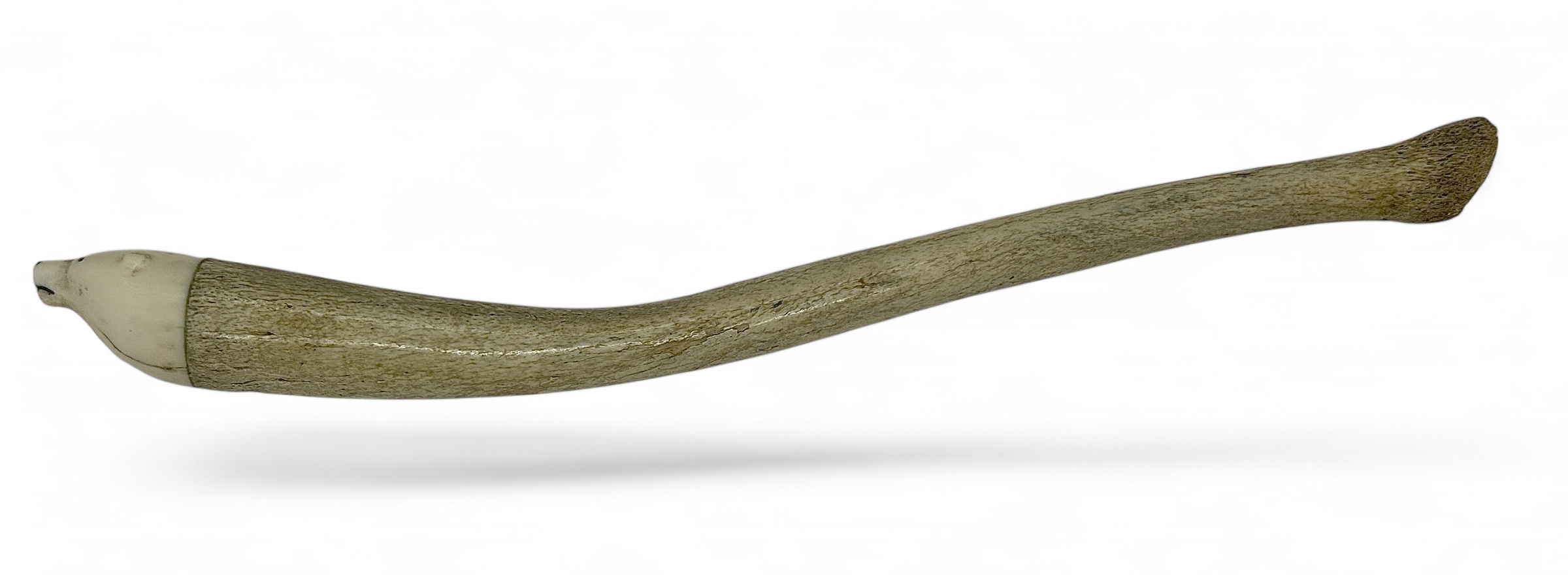
Humans obviously don’t have a penis bone, but it is present in other mammals, and aids sexual reproduction by maintaining stiffness during sexual penetration. The word baculum means “stick” or “staff” in Latin and originated from the Greek: βάκλον, baklon, “stick”.
This priapic bone is dense and hard, making it difficult to carve, so it wasn’t often used historically for functional items by the Inuit, even though some examples exist as clubs or tool handles. That changed during the 20thC, when tourists began to visit Alaska and the icy northern reaches of Canada.
Because of its titter-inducing origin, it’s often considered a form of amusing gewgaw. Something to show off after a drink or two one evening. However, there’s more to this one than a slightly salacious tourist souvenir, which helps to explain it as a more serious ethnographic or cultural artefact.
To read the rest of this article and find out more, please visit my antiques, art & design journal on Substack by clicking here.
