

I don’t usually buy blue and white transfer-printed pottery. If I did, I guess it would be to use. And that’s what it was made for – solid, workaday dinner and tea wares for ordinary homes, inspired by the ever-present fashion for Chinese blue and white porcelains. Just much less expensive, and much more resilient. But I couldn’t resist these tiny Victorian blue and white transfer-printed dishes, measuring only 2.75 inches, or 7cm, in diameter.
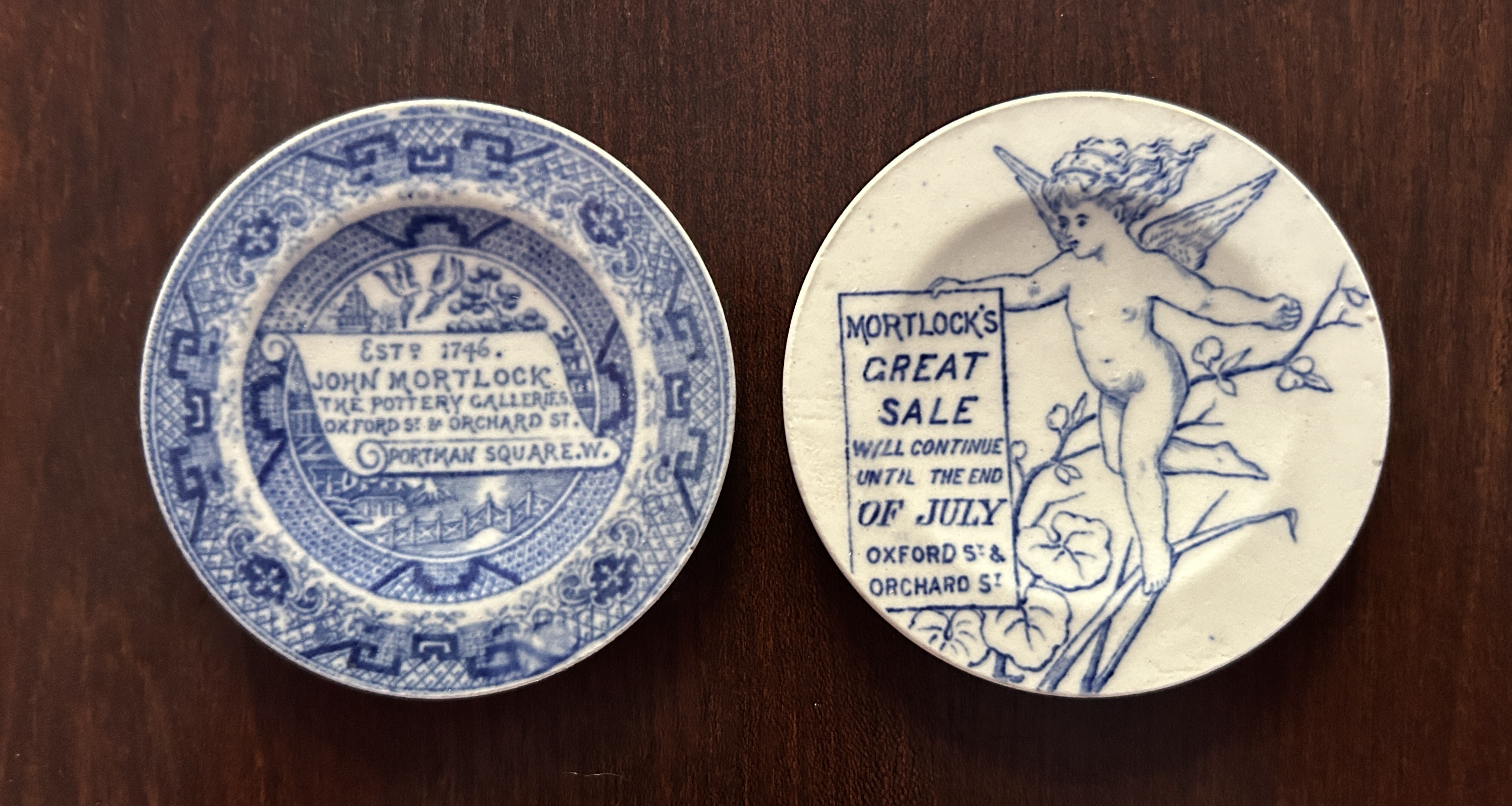
They bear the name of name of ‘Mortlock’s’ or ‘John Mortlock’. Established in 1746 by John Mortlock I (1698-1758), Mortlock’s were a luxury retailer, rather than a maker. They were considered the most important and influential retailer in 19thC London and held great sway with many of The Potteries’ most prestigious makers including Coalport and Minton, even to the extent that their name was added to the marks on the bases, rather than that of the actual maker. Like many similar retailers, they also employed a team of decorators to execute many of the patterns, some of which were exclusive. And, wow, these patterns were often supremely patterned, being highly detailed with many fashionable motifs of the day.
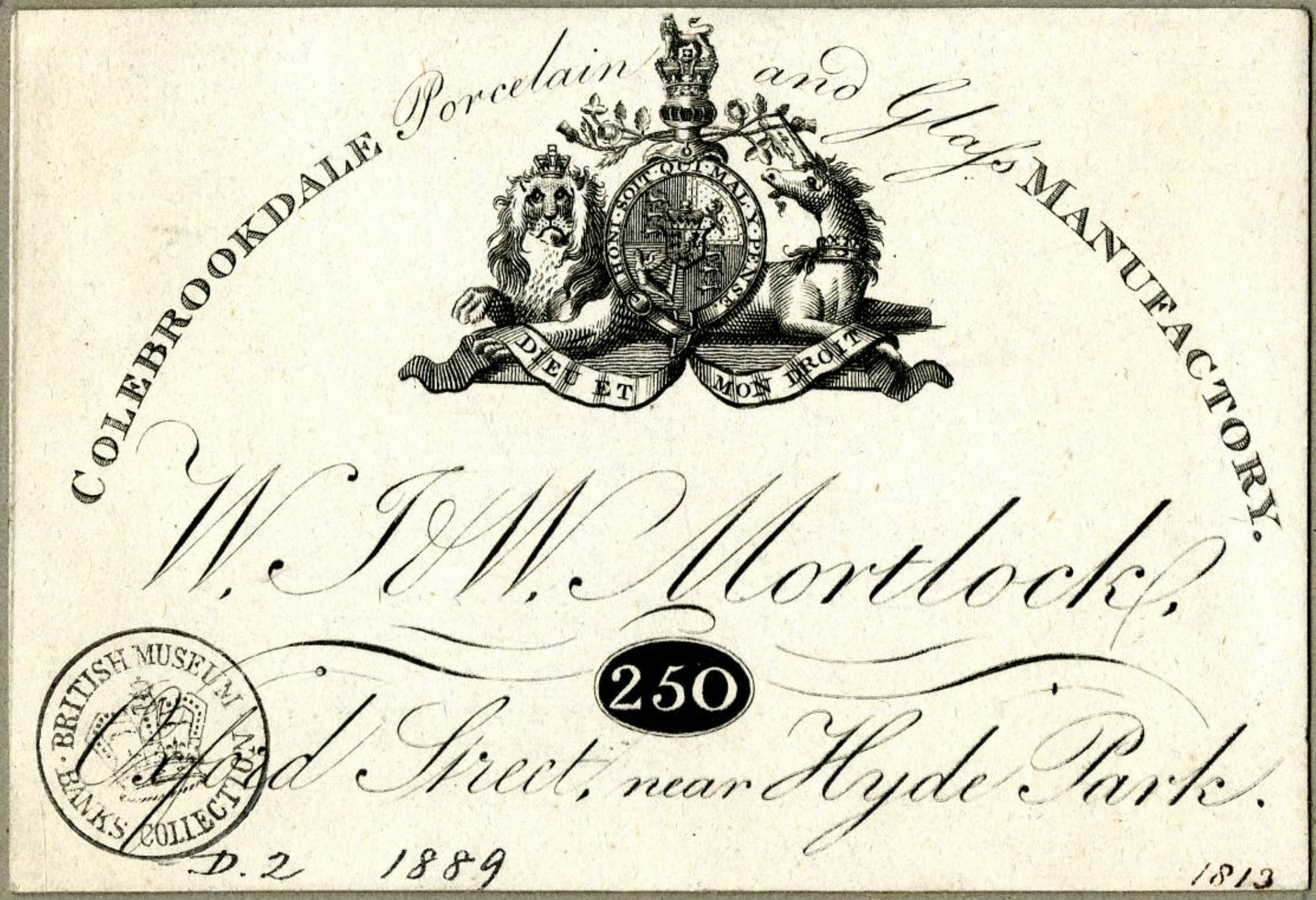
As such, their ceramics were both very high quality and very costly – a Coalport full dinner service might cost 200 guineas (around £20,000 today) and a single dinner plate might cost around £8, the equivalent of six months’ wages for a farm or agricultural worker. Posh indeed.
Moreover, rather incredible as it sounds today, in 1820, two workers were sentences to death at The Old Bailey for stealing £80 worth of Mortlock ceramics and a pair of boots (!) from the Mortlock boarding house they were staying in. Blimey!
But back to my miniature plates…what are they, and why and when were they made?
To read the rest of this article and find out more, please visit my antiques, art & design journal on Substack by clicking here. This one is FREE to read!
