

I’ve long been a fan of studio glass – glass made from the mid-1960s onwards when the studio glass movement finally freed the medium of glass from factories to be used by individual artists. Glass could finally become a medium for art. It’s a seriously major turning point in 20th century design, art and decorative arts.
The movement originated in America in the mid-1960s, when Dominick Labino and Harvey Littleton teamed up to find a way for glass to be melted and handled outside of the huge factory furnaces that had historically been required. Labino was a highly talented glass technician for Corning Glass, and Littleton was a progressive ceramics instructor at the University of Wisconsin. Frustrated that glass could not be used by an individual artist, they solved the problem together, developed the results at the Toledo Museum of Art seminars in 1962, and then at the subsequent graduate course at the University of Wisconsin from 1963. Their work, the work of their students, and then that of their students in turn, revolutionised the way art glass was made.
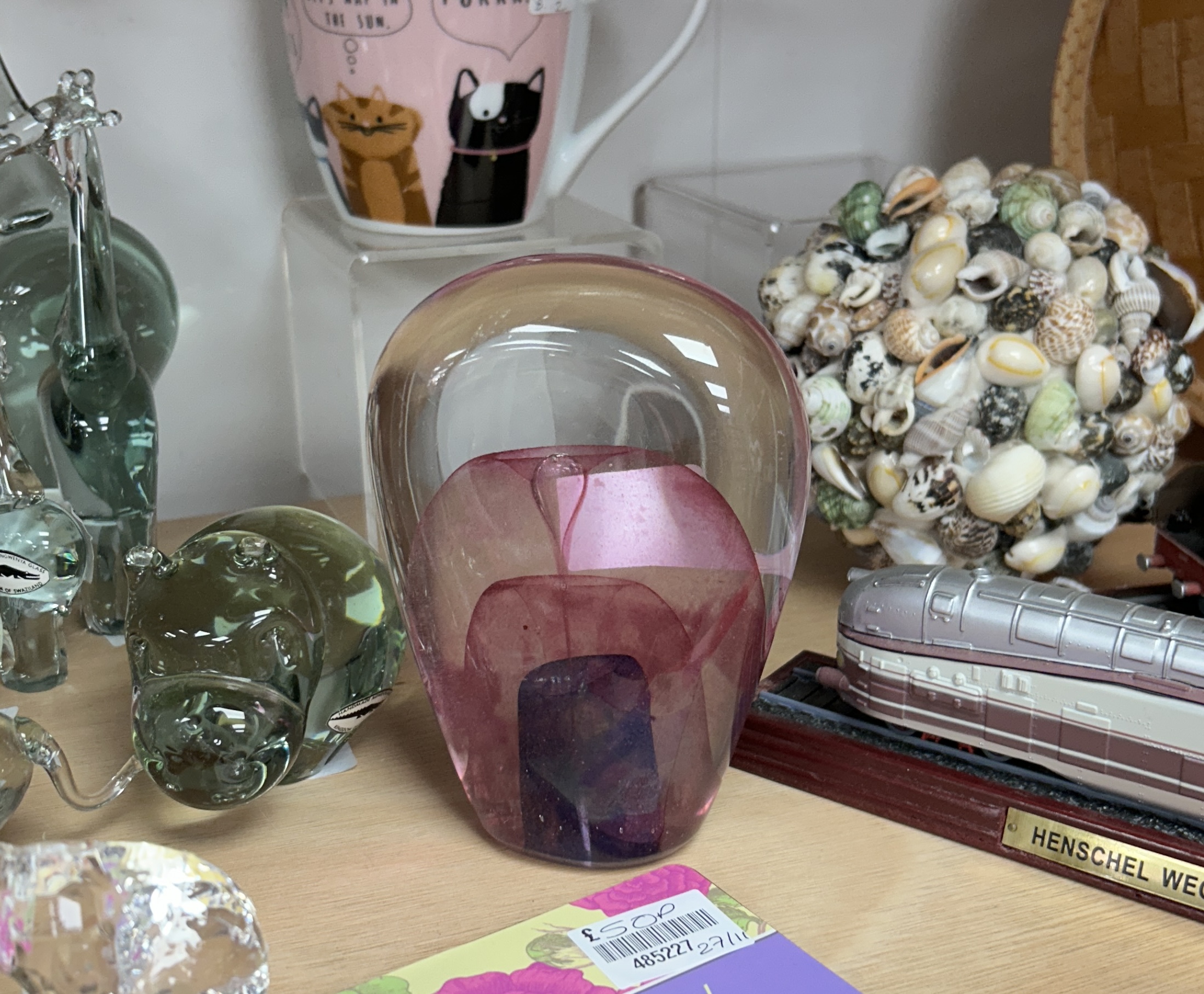
Both became successful studio glass artists in their own rights during the 1970s, 80s & 90s, with Labino’s career being limited by his death in 1987. One of his most celebrated ranges was his series of ‘Emergence’ sculptures – which really do look like this sculpture (above) that I found in a charity shop recently. Except you only usually see them in museums and fine art auctions…
So is this a rare and valuable example of his sought-after ‘Emergence’ sculptures? If so, I could be looking at a price tag of anywhere from £2,000-3,000 upwards. That’s quite a return on the £5 price sticker!!
Much of what we’re going to look at to get to the answer can be applied to identifying any glass, which is typically unmarked and unsigned….
To read the rest of this article and find out whether it’s worth a fortune or a fiver, please visit my antiques, art & design journal on Substack by clicking here.
