

There are some things in my collection that I don’t really know about. In fact, it’s these things I’m drawn to – and buy – the most. The world has enough experts and dealers in Royal Worcester, Meissen, and such things that have been heavily researched for decades, even centuries. If it’s highly unusual and I don’t know about it, everyone else shrugs, and it’s good quality (or better), then I’m interested. It’s partly about the journey of learning that comes next.
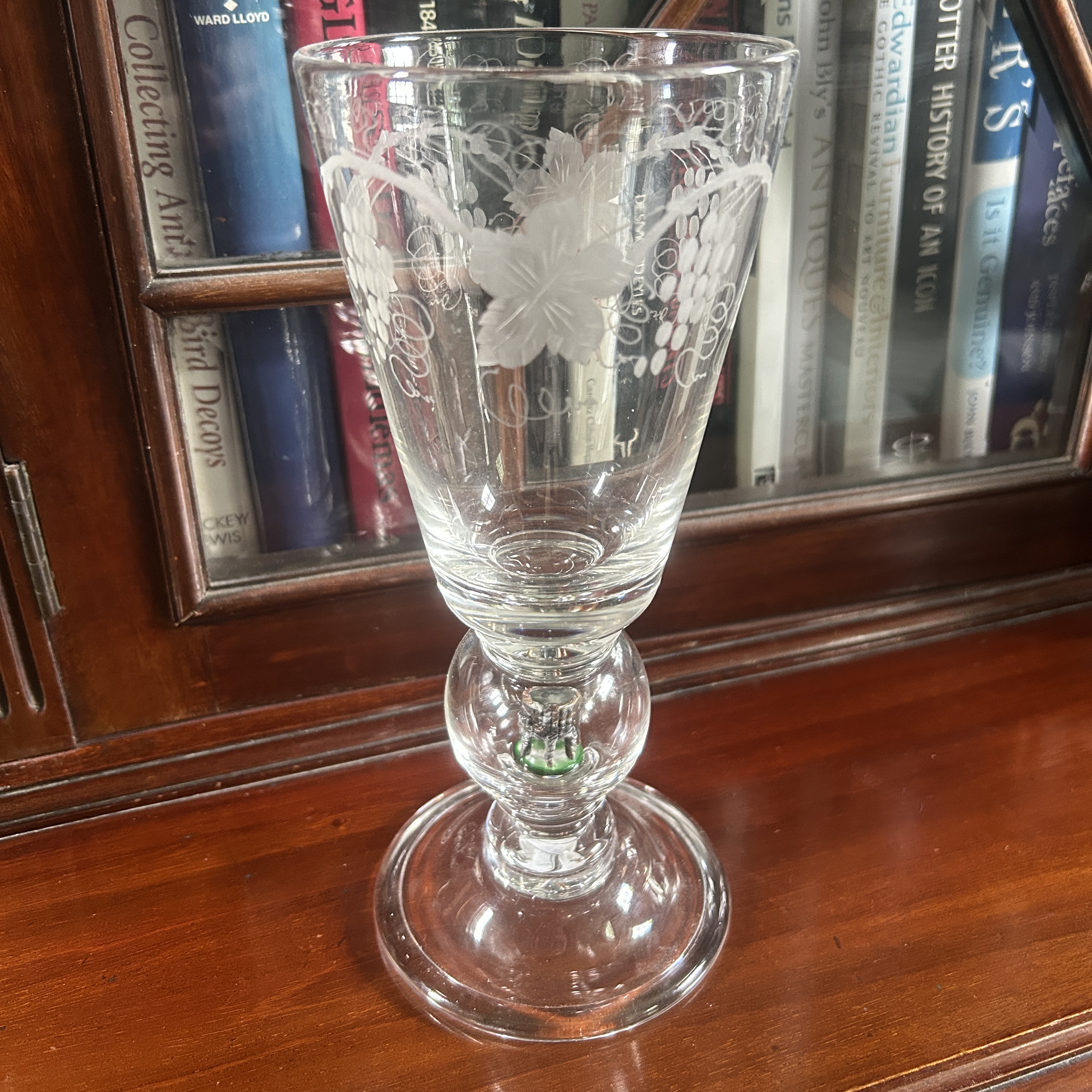
One such object is this large display goblet, which I bought as part of a pair at auction in 2014. I sold one in 2019, but couldn’t part with the second one. This is one of those instances where breaking up a pair isn’t too much of a concern, like it is with candlesticks or vases.
The shape is like an 18thC Georgian baluster-shaped wine glass, even with its folded foot, but the bright colour to the colourless glass indicates it’s much later in date. It was made by Stevens & Williams, also known as Royal Brierley, during the late 1920s or 1930s.
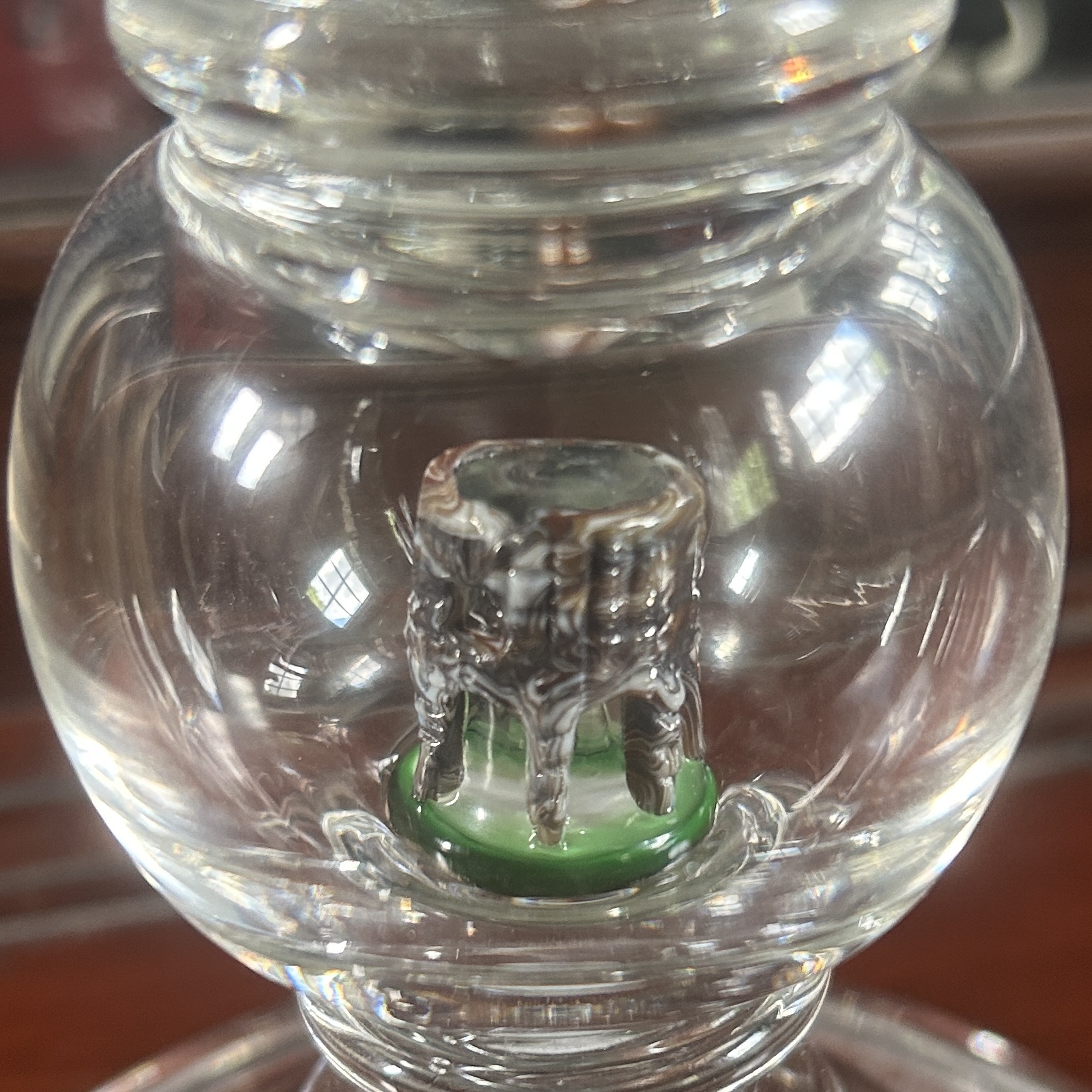
Apart from its size, at 22.5cm (nearly 9 inches) high, there’s one thing that marks it out as unusual – the small tower trapped inside a spherical knop on the stem. It’s lampworked, meaning it was made separately and individually by a glassmaker using small tubes or thin canes of glass and tools, with the glass being heated until it’s molten over something akin to a bunsen burner found in a school chemistry lab. This glassmaking art is still practised today, typically in popular tourist areas, for the creation of small animals or vignettes for sale to tourists, who can also watch the artist at work.
In this instance, it’s not a case of what it is, but why it exists at all!
Billy Swingewood
As the goblet was made by Stevens & Williams, this small tower was made by a talented glassmaker called William Swingewood Snr (1871-1939), who worked with them specialising in tiny lampworked designs. Known as ‘Billy’, or ‘Old Billy’, he produced a series of miniature sculptures encased in glass spheres for the Stevens & Williams glassmakers to incorporate into a series of drinking glasses.
Typical motifs include huntsmen on horses with hounds and a fox (which made up a series of six called ‘The Kill’), sportsmen such as diving women or golfers, birds and other animals, dice, flowers, and even Adam & Eve! So what’s this? A tower?
To read the rest of this article and find out more, please visit my antiques, art & design journal on Substack by clicking here. This one is FREE to read!
