

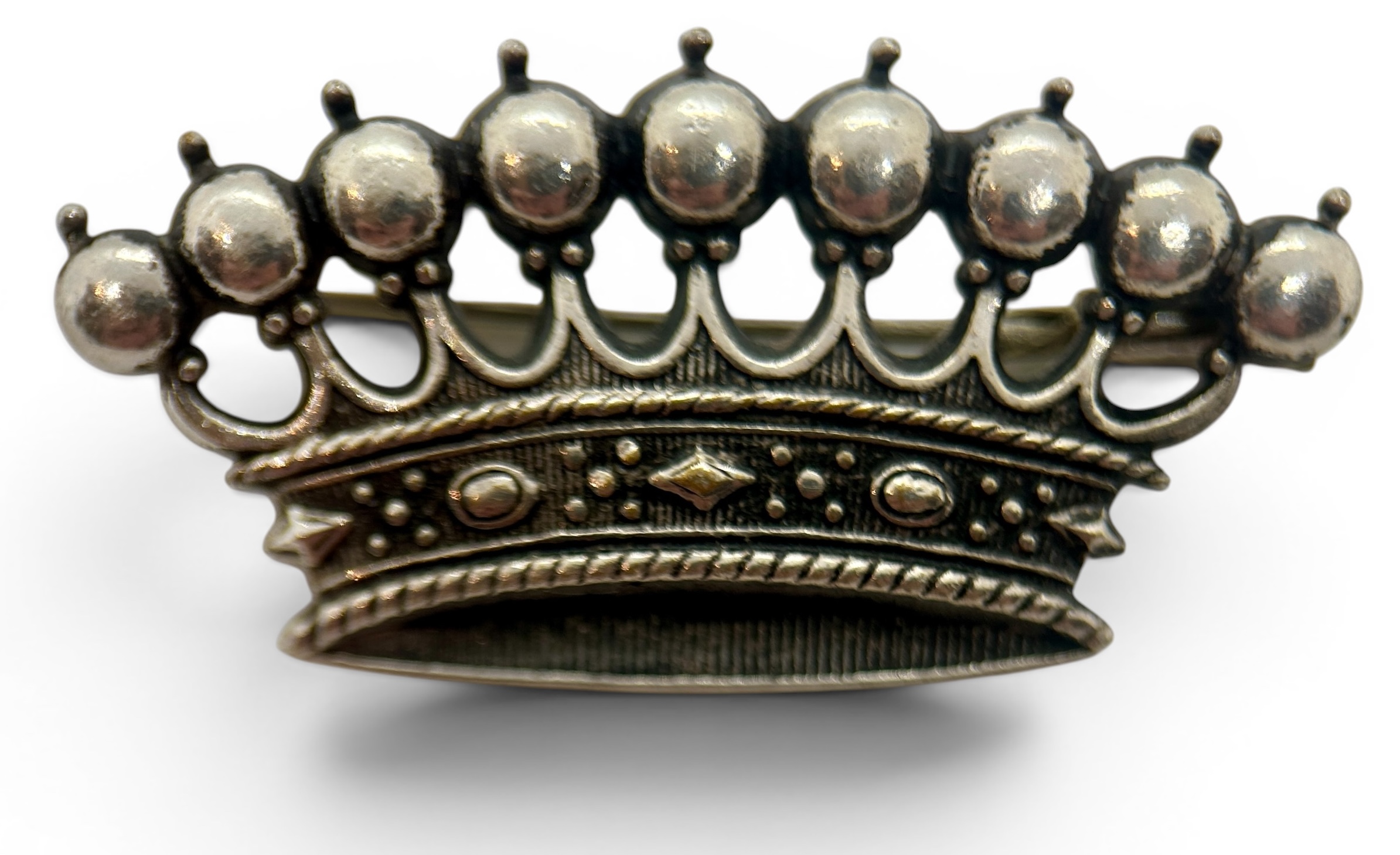
I adore costume jewellery pins, and I do love a good crown pin. Forget the precious metal and gemstone ones, especially with gold being at the heights that it is now. Costume jewellery designs are just as eye-catching, and the story behind them can be a ‘crowning glory’. There’s one pin in particular that always catches the most attention, simply because it’s so extravagant – and the story behind it makes it one of the most valuable and sought-after of its type. But first, let’s look at the background.
Crown or coronet shaped pins became popular during the 1930s & 40s, coinciding with the release of a string of romantic-historical films about the lifestyle and trappings of British and European aristocracy. Americans’ imaginations were fired and a number of costume jewellery makers produced pins to satiate a huge public appetite. The undisputed ‘king’ was Alfred Philippe, whose designs for Trifari involved large, colourful cabochons and rhinestones, typically on a sterling silver body.
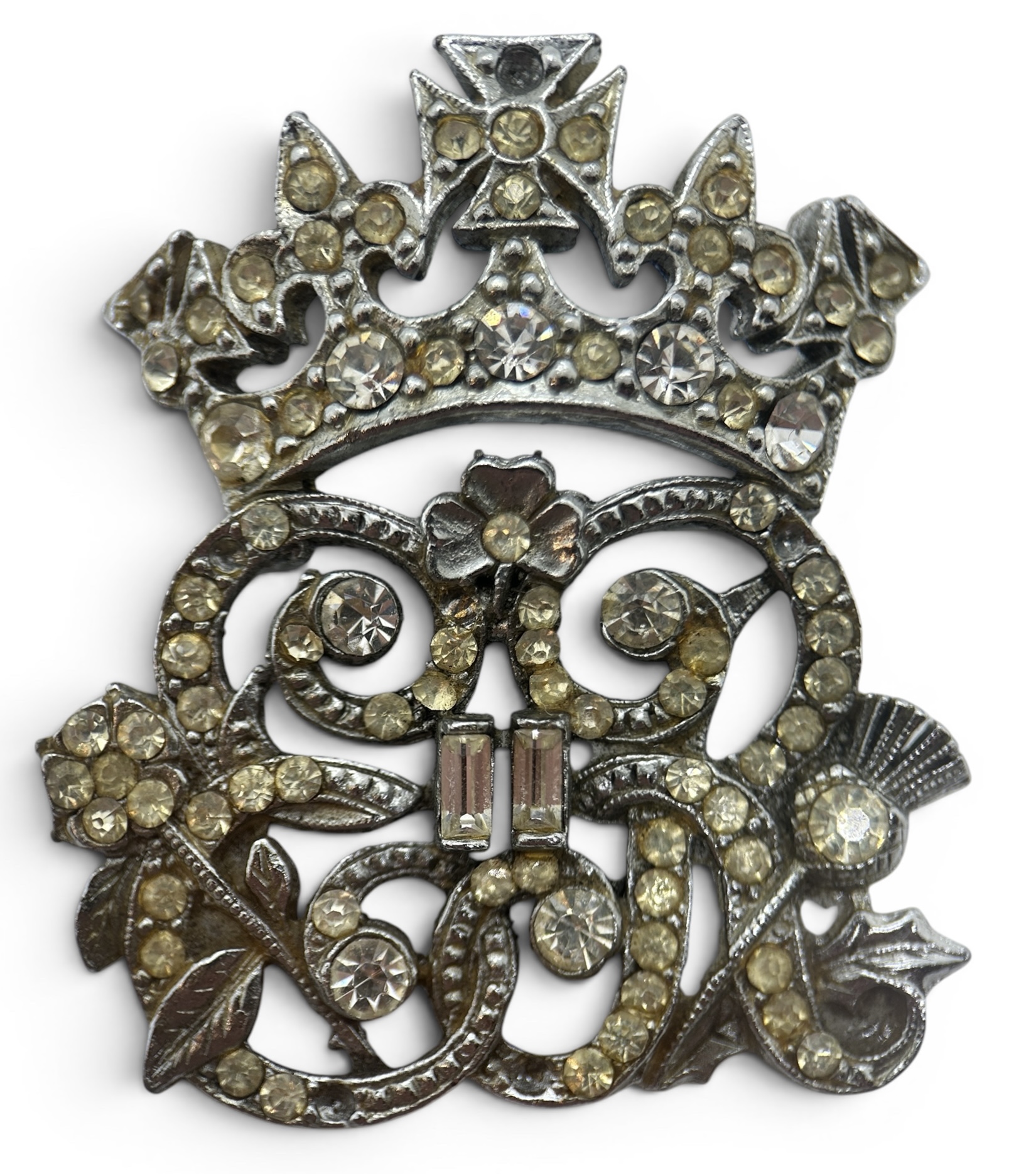
By the 1950s, the crown craze had taken hold in the UK and was further bolstered by the Coronation of Queen Elizabeth II in 1953. Although many of these weren’t of the best quality, they sold in large numbers to those keen to commemorate the national celebration and our beautiful young queen.
Lacking events to be tied into, the craze abated a little, to return in the 1980s with names such as Vivienne Westwood, who used crowns along with her famous regal orb, and Butler & Wilson whose designs are instantly recognisable by their busily sparkling rainbow of colours.
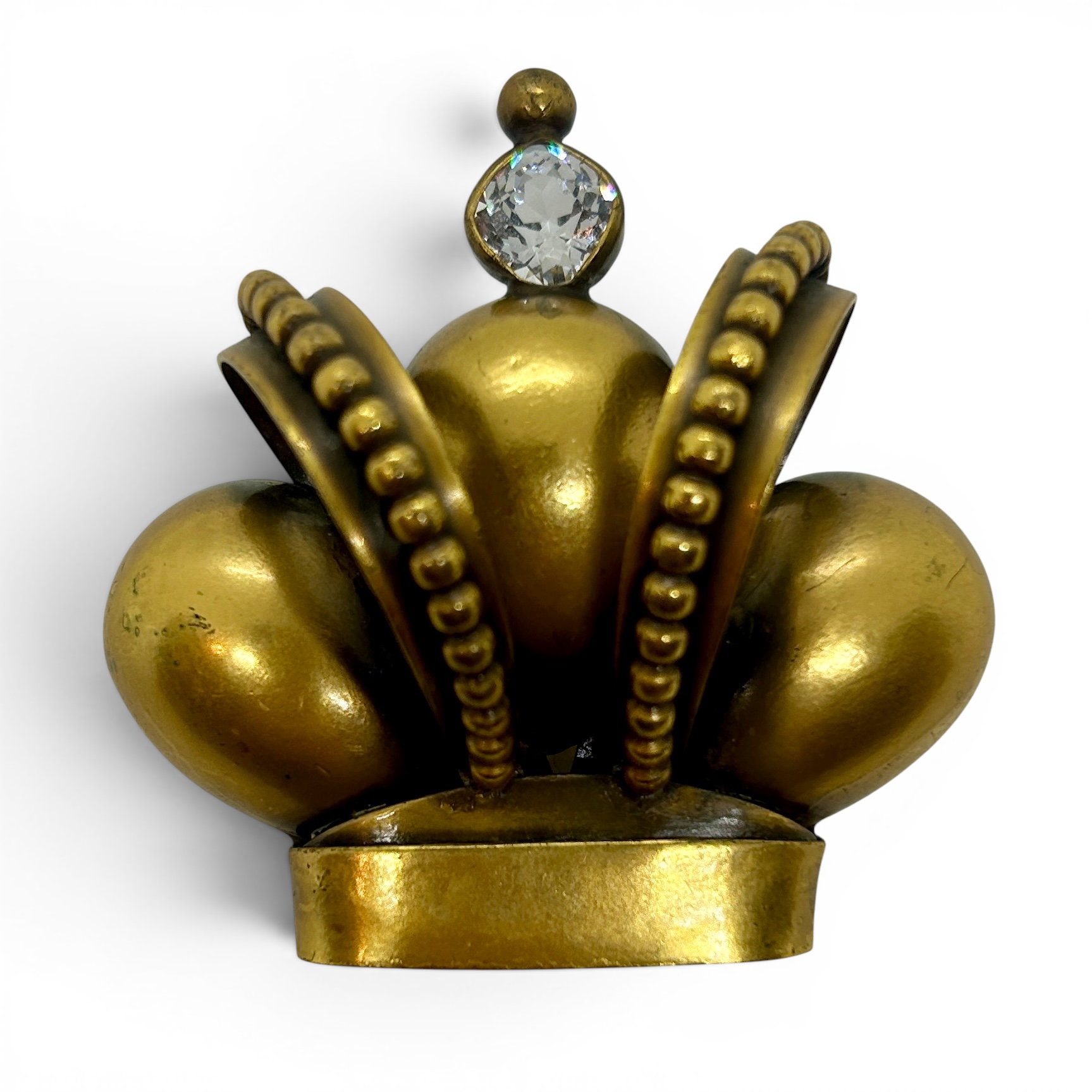
But there’s one crown pin that stands head and shoulders above the rest – and has a fascinating story to boot. The size catches people’s eyes at first. At 2 inches high and 2 inches wide, it’s not one for shrinking violets. But it’s not just the size, it’s the depth, as the crown’s arches stick out from your lapel by just over an inch, and it’s surmounted with a large sparking diamond-like rhinestone. But it’s a bit, well, brassy, right? How can that be interesting or valuable? Read on…
To read the rest of this article and find out more, please visit my antiques, art & design journal on Substack by clicking here.
