

By the time you get some experience out there in the wild under your belt, if you see something that you haven’t seen it before, it’s worth considering. The longer and broader that experience becomes, the more it’s worth buying something that you haven’t seen before – if you like it and can afford it. I hadn’t seen one of these vases in my near-30 year career and thought it was great quality Murano glass, so I reached for my wallet.
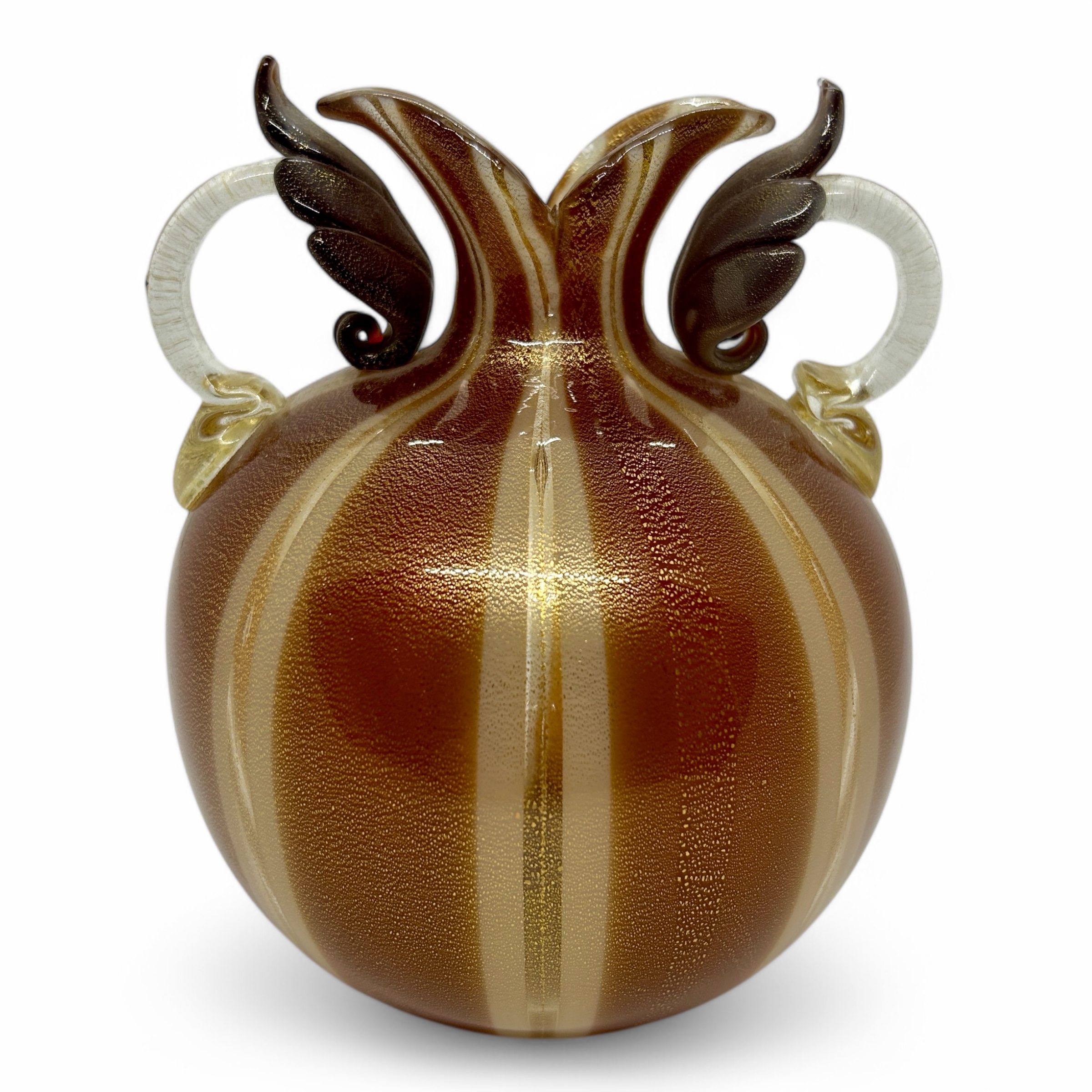
And then the dealer selling it intervened, “I agree that it’s Murano, but don’t move so fast. It’s damaged.” Silly me, I should have looked closer first, but my excitement took over. Don’t tell me that that’s never happened to you!! Damaged glass is even more tricky to repair well than damaged ceramics, and sometimes it simply isn’t possible. There’s a 2cm crack on one side of the V-shaped cut rim, the top of one of the curving leaves by the handles had been chipped off, and the body may have a heat crack from when one of the handles was applied. It may be possible to fill the crack with resin, and use resin to finish off the missing leaf tip, but it’s an expensive and specialist job.
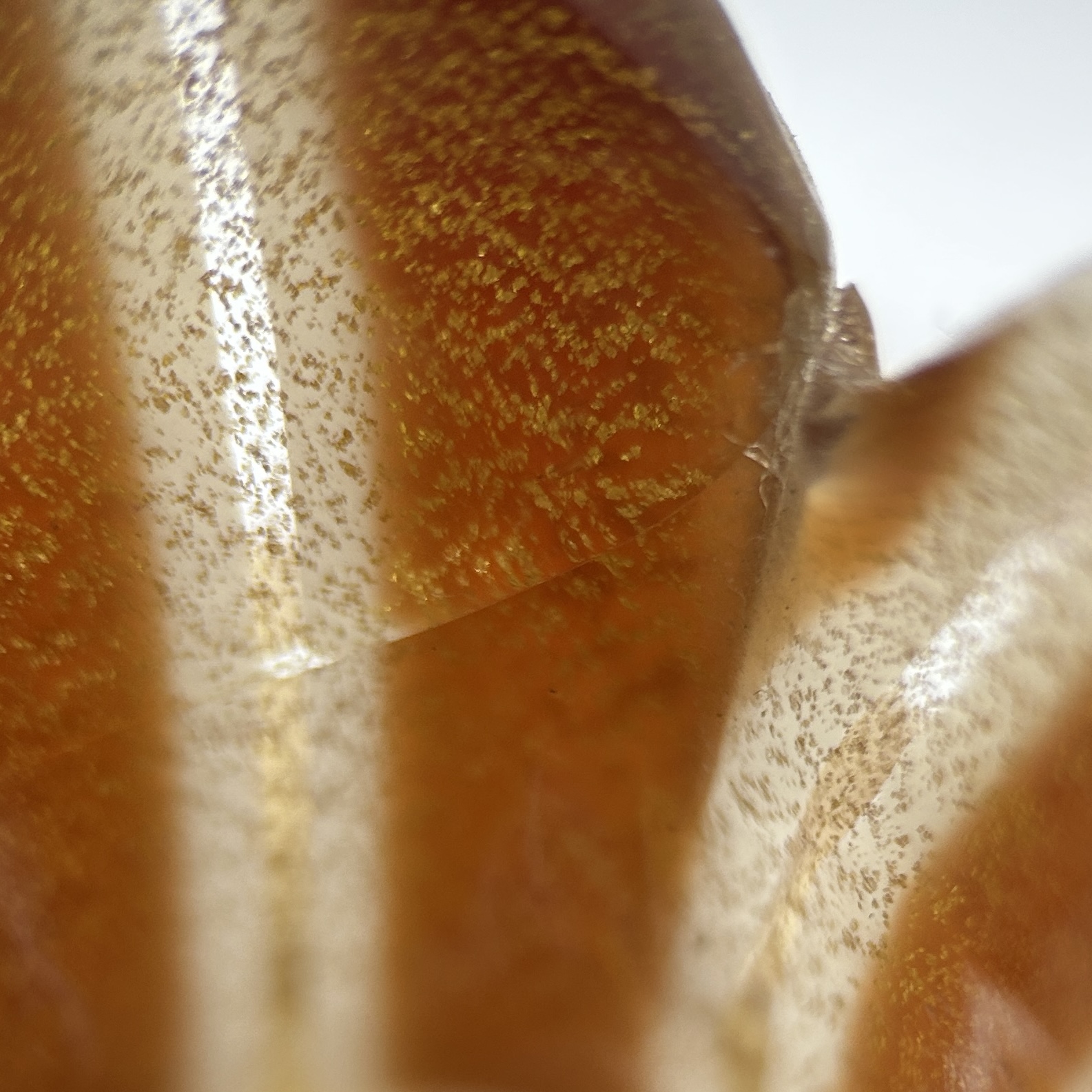
Would that be worth it? In fact, is it worth buying at all? Well, let’s analyse what’s in front of us and take it apart, like I did at the time, and then let’s do some research.
What Are We Looking At?
Look at the shape – this is far from the standard, run of mill Murano glass one sees out there. Bowls, facet cut or bulbous sommerso vases, swans, that sort of thing. It’s an unusual, fruit-like form, almost like a pomegranate. A spherical body leads to a flared and cut neck, with curving handles moving to join the insides of Baroque, curving and curled leaves. Let’s look deeper…
To read the rest of this article and find out whether it was worth buying, please visit my antiques, art & design journal on Substack by clicking here.
With thanks to Alex Kizewski of Attainable Rarities for his help with this vase.
