

I’m very fond of antique and vintage fountain pens. In fact, they were one of the first things I began to collect seriously. They were also the main part of my first job in the antiques business when I worked in the Collectors Department in Bonhams in London during the late 1990s, which was then home to the largest pen auctions in the world.

And it was there that I encountered my true love in antique and vintage writing equipment, early silver propelling pencils by Sampson Mordan, and dip pens invented by Joseph Bramah. They sound obscure and niche, but the pencils in particular are regularly seen at antique shops, fairs and auctions if you look carefully. I’m going to save Mordan’s propelling pencils for another day, as I want to focus here on a very special piece that I encountered recently. And one that is also linked to both the beer pump and flushing toilet! Human necessities, no?
It’s an early 19th century dip pen, and it’s wonderful – just look at the shape. A curving and twisting snake grips grips the place where the nib should be. Many pass over these penholders as they think the nib is missing, having been swiped, sold and melted down. But the nib, or the lack thereof, is actually half the point.
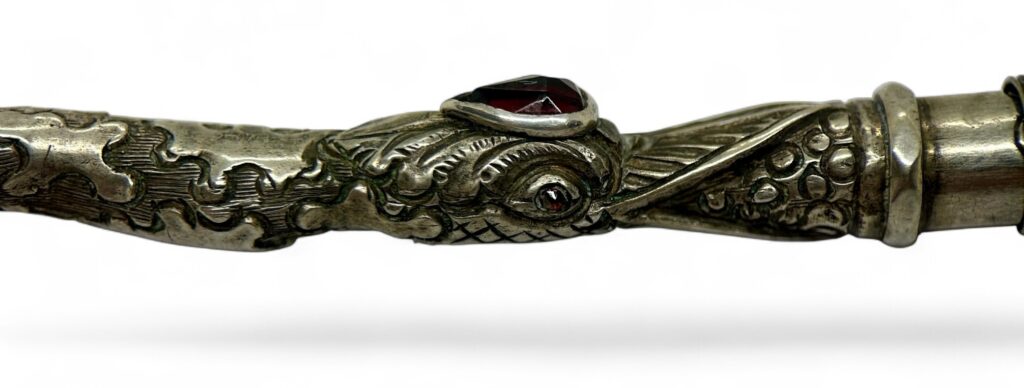
In this article, I’m going to take a ‘deep dive’ into how to recognise this rare pen type which is often over-looked, and then look at how to identify the rarest and the best. As well as link that highly improbable combination of different things!
So Where’s The Nib?
The legendary quill feather pen was the dominant writing instrument from the Dark Ages to the 19th century – well over two millennia. The flights were trimmed down or off a goose feather, and the nib was cut, shaped and split from the opposite end to enable it to be repeatedly dipped into a vessel of ink, and used to write. Millions of geese were farmed for their feathers to cope with demand, and the nib part of the quill had to be regularly recut and sharpened in order to write properly – a skill in itself. Of course, the quill was shortened every time this had to be done. But an eminent Georgian came to the rescue…
To read the rest of this article and find out more about Bramah, his pens and the strange combination of subjects in the title, please visit my antiques, art & design journal on Substack by clicking here.
