

“I said Charles Horner style”, he reiterated to me after I picked up what seemed like a complete bargain at a local antiques fair. A silver Art Nouveau necklace pendant with flowing lines, a cell-like organic form, and coloured enamel panels. I had picked it up as I had immediately recognised the design as by Charles Horner, one of the early 20th century’s most celebrated and prolific British jewellers for the burgeoning Victorian middle classes. And highly collectable today, with prices generally ranging from £80 to over £500 at auction, but with most generally settling at around a couple of hundred pounds.
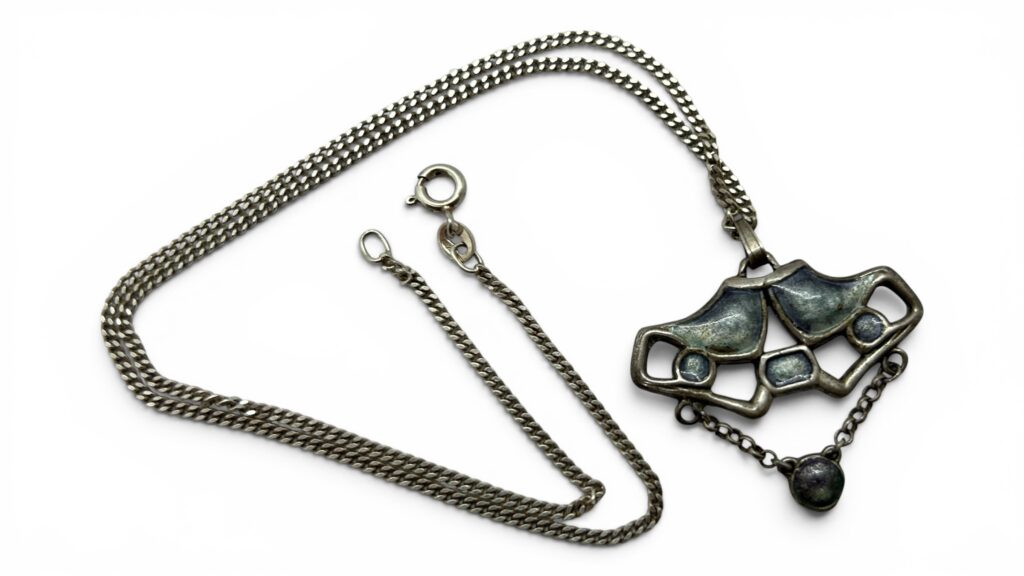
So, at £23, it seemed like a steal – around a tenth of what it should be worth. But, if it looks too good to be true, it probably is. And, looking at the evidence in front of my eyes by inspecting it further, the old adage proved to be correct. It’s a wrong ‘un. But how do you tell? In this article, we’ll look at Charles Horner and then examine all the features that show this one to be wrong.
Who Was Charles Horner?
The son of a weaver, Charles Horner (1837-96) founded his metalware company in Halifax, Yorkshire during the 1860s. Over the next century, the company rapidly grew to be highly successful, lasting longer than most of its competitors and only finally closing in 1984. Although it is best known today for its typically silver jewellery, primarily pendants, during the Victorian and Edwardian period it was best known for something quite different – a thimble.
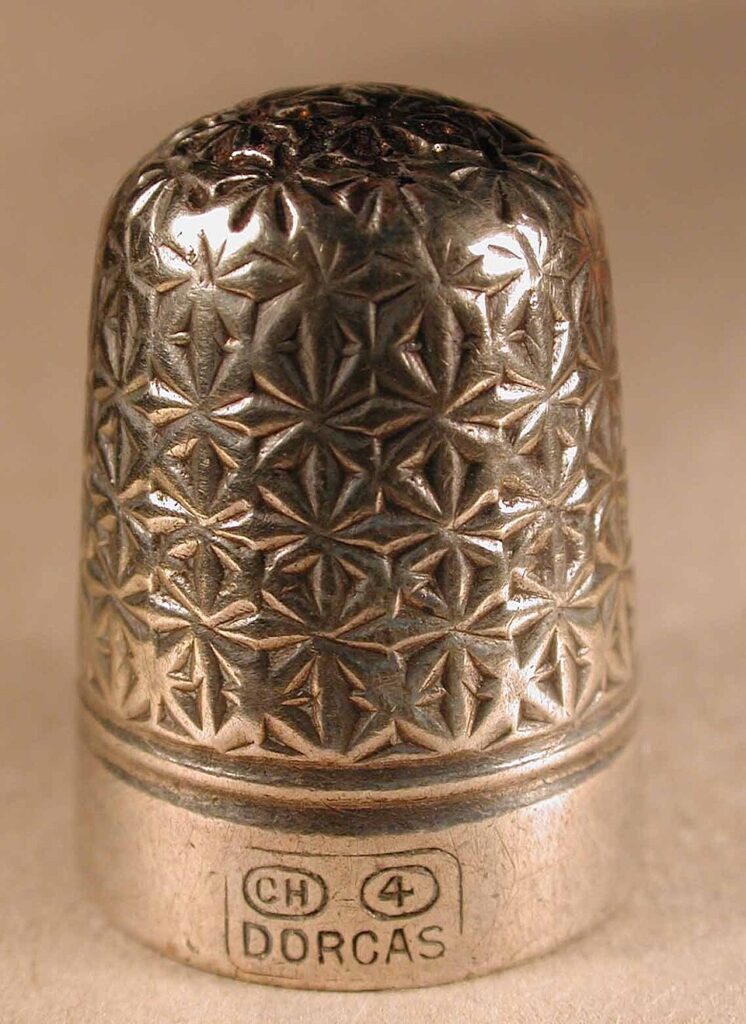
Silver is a comparatively soft metal and elegant Victorian ladies often hurt their fingers when a sewing needle pierced the shell of a silver thimble, particularly as it wore down over use. In 1888, Horner patented the ‘Dorcas’ thimble, which was made from a steel shell that was sandwiched on the inside and out with silver. Luxury and practicality! Produced until 1947, the ‘Dorcas’ thimble made the company’s fame and fortune.
Dedicated Followers Of Fashion
His company continued hitting the commercial nail on the head. The wide-brimmed hats that were fashionable with ladies from around 1890 onwards had to be anchored to heads of hair using hatpins. As hat brims became even wider and more extravagant, more hatpins were required by elegant ladies to hold them in place. Across the 25 or so years that such hats were the height of fashion, the firm produced perhaps the widest number of shapes, styles and materials in Britain, and sold tens of thousands of them here and across the world. They arguably turned the practical hatpin into a stylish must-have accessory all of its own. Although rarely used today, Horner’s hatpins are still widely sought-after and collected.
After Charles’ death, the company was inherited by his two sons, Charles and James, and they continued to follow fashion, widening the company’s range of jewellery produced in the dominant style of the day – Art Nouveau, with its flowing lines inspired by nature. Following the lead from jewellers such as Philippe Wolfers, they often incorporated vibrant enamelled panels into their flowing, curving forms. Highly prolific, the company also produced buttons, bangles and bracelets, brooches, cufflinks, earrings, clock cases, tableware, and many other novelties. So they were pretty damned good at what they did – and they didn’t make this pendant. Let’s examine why…
To read the rest of this article and find out the reasons why this pendant is a wrong ‘un, please visit my antiques, art & design journal on Substack by clicking here.
